
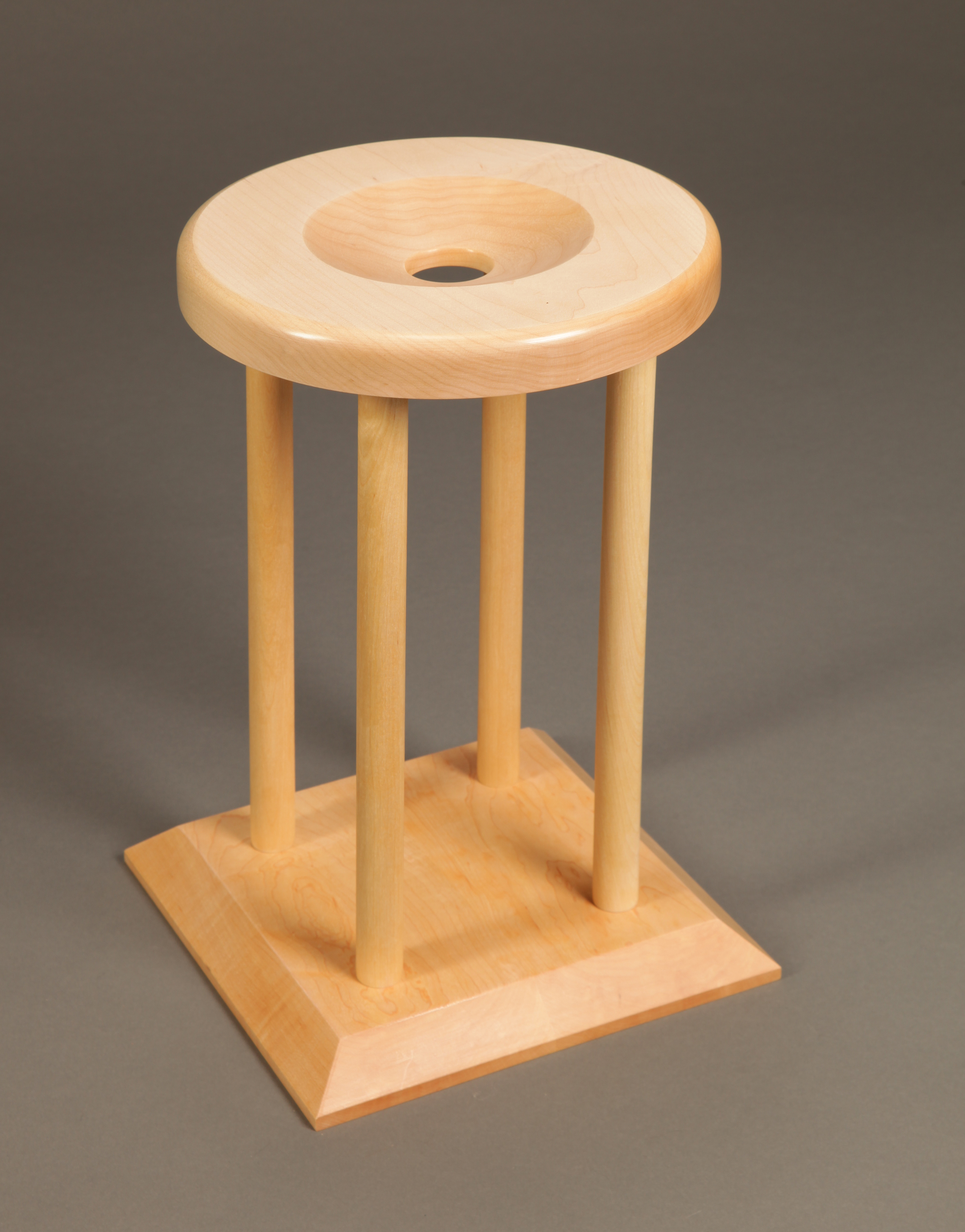
Buying your first marudai can feel a little overwhelming. The choices below are the ones most often made by our customers and should help you decide what will work best for your needs.
Marudai Height
Many braiders choose the 26-inch-high Western-style marudai because it is designed for use while seated in a chair. Others prefer the traditional Japanese-style 16-inch legs so they can kneel while braiding. The shorter legs can also be placed on a sturdy box, stack of books, or low table to achieve a comfortable working height while seated or standing.
Some braiders eventually purchase both sets of legs so they have the flexibility to braid comfortably in a variety of settings.
Mirror Size
Some braiders choose the 10-inch mirror because it comfortably accommodates up to 24 tama, making it suitable for the majority of braids.
Those who know they will want to use as many as 32 tama, or who simply prefer additional working space, usually choose the 12-inch mirror. More tama allow for increasingly detailed braid structures and more complex interlacements.
Tama
Our customers find that 70-gram tama are the most versatile choice for beginning marudai braiders. Most people start with either 8 or 16 tama.
As your skills grow, additional tama allow you to create increasingly complex braid structures and patterns.
Recommended Resources
For beginning marudai braiders, we recommend:
Beginner's Guide to Japanese Braiding: The Art of Kumihimo by Jacqui Carey is an outstanding introduction to marudai braiding. It includes several eight-tama braids with clear instructions and excellent full-color photographs throughout.
Kumihimo: Japanese Silk Braiding Techniques by Catherine Martin provides thorough instruction from the first non-Japanese graduate of the Domyo School in Japan.
Braids: 250 Patterns from Japan, Peru, and Beyond by Rodrick Owen has been out of print for many years but is often available through used bookstores and online booksellers. We continue to recommend it because it remains one of the finest references for marudai braiders. Occasionally you will find a used copy available in our used books section.
Michael Hattori has made some very helpful YouTube videos that are especially helpful for beginning marudai braiders:
How to Tie on a Leader, which you could use on the disk if you want to be able to braid almost to the end of the threads. A technique suitable for all thread types.
Ito Sabaki, how you prepare the traditional threads for braiding. He is demonstrating using a marudai but if you are using the disk simply put it on a table with a heavy book to keep it in place as you work.
Basic Marudai Technique 1: Tama Handling will help get you starting right on how to handle the thread and move the tama correctly.
Kamkuri-Guri Twist — Demonstrates twisting threads for the Ayatakedai and other structures. Occasionally you may find a marudai pattern that calls for twisted threads. Familiarize yourself with Michael's demonstration on twisting threads for the ayatakedai as it is the most efficient.
As your interest grows, you'll also find valuable information and a welcoming community through The American Kumihimo Society and The Braid Society (UK).
Before You Order
Please read the Shipping Conundrum before placing your order. It explains why the shipping estimate shown during checkout may be higher than the amount ultimately charged.